Plasticaware Blog
6. Blog: Achievements May & June
The fight against plastic pollution is ongoing! Our first project in Capurganá may have come to an end but that does not mean we have stopped working. With administrative work piling up, we’d like to give you a glimpse behind the scenes and let you know what we have been up to during the months of May and June.
In order to scale our efforts in the future, we meticulously documented our every step during the pilot project in Capurganá. This included daily protocols of tasks, conversations, achievements, unforeseen challenges, necessary permits, learning materials, etc, etc, etc. Leaving Capurganá meant the time has come to analyze our documentation, be critical about our achievements, discuss what went well and what we could have done better, and most importantly how we will continue. The result of that hard work: a playbook that can be used and reused on every new project site by any stakeholder or co-creators.
Wrapping up our project in Capurganá also meant reviewing the hours of video material produced and condensing it to meaningful content. So far, we’ve created two short videos (english/ spanish) which document our efforts in fighting plastic pollution, conveys our passion for the topic, and demonstrates the necessity and urgency for these projects.
Over the past few months we have been fortunate enough to have been approached by a great number of individuals and organizations offering their help and support. This led to many conversations on how we could divide the work, include volunteers, define subgroups, and make sure that the communication between Switzerland and Colombia runs seamlessly. We learned that, as we grow, the setup of our organisation needs to be defined more clearly.
As part of that, we’ve sharpened our vision which will serve as our north star for the coming years. Our vision is to become a Plasticaware Community/Family, where everyone follows the same dream to fight plastic pollution on our planet sustainably. This works well with our original mission statement: “Empower people to reduce, recycle, and upcycle plastic through education, awareness, and support”. And, together, they create our winning formula:
Awareness & Education + Empowerment + Transformation = Sustainability
Lastly, as with every non-profit organization, the topic of fundraising becomes a constant companion. Without funds, our association cannot continue. That is why we have opened a Go-Fund Me publicity campaign where we show what we have achieved in our pilot project so far and what we aim to do next.
Please do remember there are many ways to help. Creating awareness and sharing our story is also one of them. The University of St. Gallen published an interview on their blog “Startups im Fokus”. As we say, sharing is caring, so please do share the link and our mission with your network. Here is the link to the article: HSG Alumni
For our next blog, we don’t want to reveal too much but we are currently working on a Sustainability Plan for Capurganá as well as a new project in another community in Colombia :).
Until then, see you soon.


5. Blog: The dilemma with microfibers
Shopping: the joy of seeing neatly folded clothes in stores, the feeling of different garments gliding through your hands as you move along the clothing racks, and the excitement rushing through you as you receive your bag from the shopping assistance. A simply magical experience! And then, once home: the hint of a fresh summer breeze when you open your washing machine door, and the confidence you feel and project when you put that special something new on for the very first time. Captivating. I will forever be amazed by the spell the fashion industry has cast over us.
Wait? What? Fashion? I thought this article was about microfibers! Yes, today we are going to talk about microfibers. What they are, how they impact the environment, and what we can do to minimize their use.
Simply put, microplastic (plastic particles < 5 millimeters) come in three forms: 1.) microflakes derived from plastic waste such as water bottles or plastic bags, 2.) microbeads predominantly used in the beauty industry (now banned), and 3.) our main focus today: microfibers. Microfibers typically shed from synthetic textiles such as polyester, acrylic, or nylon and are released with every wash cycle (up to 10^7 fibers per wash). Now, why is this a problem? For one, washing machines are unable to filter these microfibers leaving it up to the wastewater treatment plants to do so. The good news – wastewater treatment facilities can/could filter out almost all microfibers. The bad news – the remaining 1-2% of microfibers that make it through the filtered water “…still lead to millions of microplastics in the ocean every day” infiltrating our air, water, food, and bodies”. (Dervishi, 2019, O’Connor, 2018).
Picture: Illustration: Dervishi (2019) The Mi

With the rising demand for synthetic fibers over the past decades and the growing global trend of reusing recycled polyester (from plastic bottles for example) you might ask yourself: are we really doing the right thing reusing recycled polyester? Well the jury is still out but as Mary Catherine O’Connor puts it in her article: “Initial research suggested that recycled polyester might shed more microfibers,” says Katy Stevens, sustainability project manager for the outdoor gear industry consortium European Outdoor Group (EOG). “
Great. Another thing to worry about. So, what can we do while we sit in the comfort of our home and once again wait for the market to regulate “itself”, the clothing industry to take ownership, the washing machines and dryers to be upgraded and include microfiber filters, and the wastewater treatment facilities to filter out 100% of microfibers? Well, to be quite frank, there is no simple solution to this problem but I would propose the following: REDUCE.
First, you don’t have to throw all your perfectly good clothes out and start fresh, that would be just as bad for the environment. Instead, treat your existing wardrobe with care to prolong clothing life. In our fast-paced world, it is so easy to fall into the habits of tumble-drying and the likes. Especially when you have kids – trust me, I get it!!! But, just in case you want to reconsider your current routines, here are some nice tips and tricks. And let’s be honest, most of it is actually not rocket science – it’s things that our parents or grandparents have always done, and we just somehow fell out of habit.
Second, embrace slow and ethical fashion. Ever heard of a capsule wardrobe? – It will change your life for the better and your wallet will thank you for it! Choose new pieces with caution and care to ensure that each and every piece you own can be paired together, creating more outfits from fewer pieces. Work with color themes and incorporate trends as accent pieces rather than whole outfits. Consider fewer, but quality items from natural fibers. Now, wait a minute. What about the shedding of natural fibers? Yes. Of course. We should definitely not ignore the fact that clothes made from natural fibers undergo chemical treatment and shed microfibers that are harmful to the environment too – they do, however, degrade MUCH quicker than their synthetic cousins.
Lastly, goodbye fast fashion. Let’s once and for all stop buying items that are intended for limited use only. Headlines like “1.7m sequined items are BINNED after the Christmas party season but won’t ever biodegrade” have got to go. Or as Dr. Trisia Farrelly, an environmental anthropologist at Massey University in New Zealand put it: “Sequins are a short-term hit with long-term consequences, none of them good,”.
As the wonderful Jane Goodall said: “You cannot get through a single day without having an impact on the world around you. What you do makes a difference, and you have to decide what kind of difference you want to make”.
Want to learn more about capsule wardrobes and slow fashion?
- The internet is at your disposal ☺ if you google capsule wardrobe, you will receive an endless list of articles or videos on the topic. If you don’t know where to start, check out Justine Leconte Officiel’s capsule wardrobe playlist or Daria Andronescu – Create your first capsule wardrobe: Pro Fashion Tips (careful this one is a little salesy) on Youtube.
- Good on You. An app that rates over 3,000 fashion brands
- Twentyfairseven. Faire fashion news and guides.
Do you live in Switzerland and want to check out some sustainable brands which you do not have to order from abroad?
- Jungle Folk, Aargau, Basel, Bern, Fribourg, Lausanne, Luzern, Zürich
- Tarzan Store, Basel, St. Gallen, Zürich
- Die Macherei, Zürich
- RRRevolve, Bern, Zürich
- Stadtlandkind, St. Gallen (Online)
- Eco Labo, (Online)
- Kari Kari, Zürich
Want to learn more about microfibers? Here are three interesting reads:
- The Microplastics Crisis – You are the first responder
- Our clothes are contaminating our planet with tiny plastic threads
- Microfibers in oceanic surface waters: A global characterization
We’d love to hear from you. Which slow fashion brands do you think we should check out? Until then, have a wonderful day.
P.S.: NO sponsored content. The stores mentioned are simply doing amazing work and deserve a shout-out.
Blog written by Janine
4. Blog: What we’ve achieved in April 2021
Oh, hi there. Thank you so much for checking in to learn more about our latest developments. April was a month full of surprises, immense joy, and some minor challenges.
As you know, we’ve identified five main target groups to work with in Capurganá: tourists, residents, hotels, restaurants and shops, as well as adolescents/kids. While March heavily focused on educating and involving adolescents and tourists it was now time to start engaging the remaining groups.
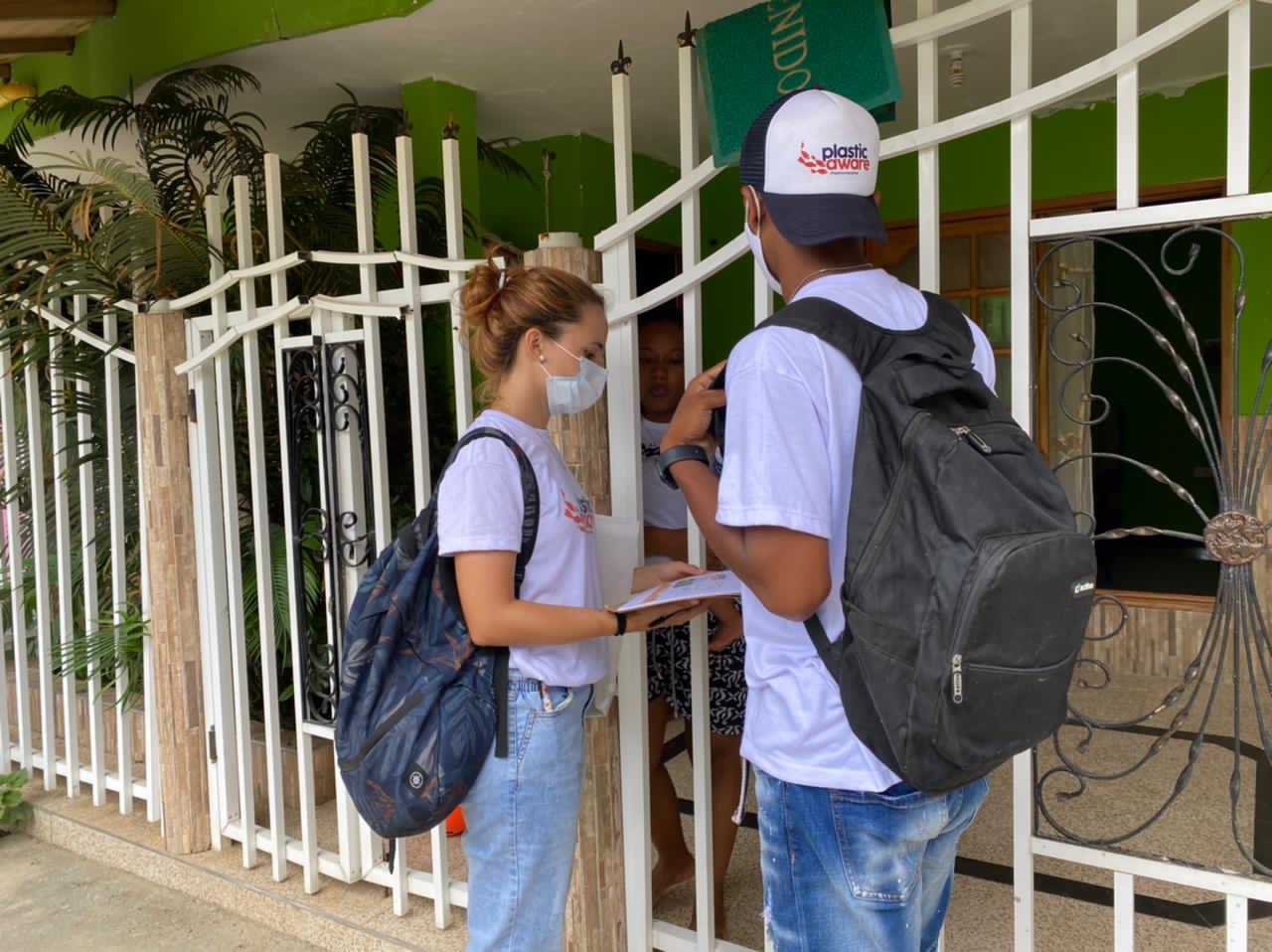
Residents. Over the course of April we visited a total of 200 households to introduce Plasticaware. Since the majority of people were unaware of the existing recycling system of the state of Colombia the conversations revolved largely around that and the importance of fighting against plastic pollution. We provided practical tips on how to reuse recyclables and introduced the concept of “eco-botella” (a plastic bottle which is filled with small plastic packages).
In the beginning the plastic heroes were a bit shy but after a few visits, they started to feel very confident and did an exceptional job. The feedback from the community was incredible. Many were eager to learn more and were thankful that we devote our time and resources to heal mother earth. Our efforts have not gone unnoticed which lead to incredibly interesting conversations and fruitful discussions, also about how we, as an organization, can improve our processes in the future.
Hotels. Capurgana is a tourist destination with a lot of hotels. It, therefore, comes as no surprise that we worked closely with the local hoteliers to create a booklet defining guidelines and responsibilities. It is extremely important for the success of our project that they act as role models and become Plasticaware ambassadors.
Restaurant & Shops. During the last week of April we focused on visiting restaurant and shop owners. Similar to the conversations with hoteliers, we decided to highlight what impact their day-to-day actions have on the environment and what their roles and responsibilities in the plastic recycling and waste management process are. Inspired by our mission, some have already taken it upon themselves to improve the current recycling standards on the island. This includes, for example, collecting plastic bottles in separate waste containers outside of their restaurants. The general awareness has risen and they have pledged to be more environmentally conscious.


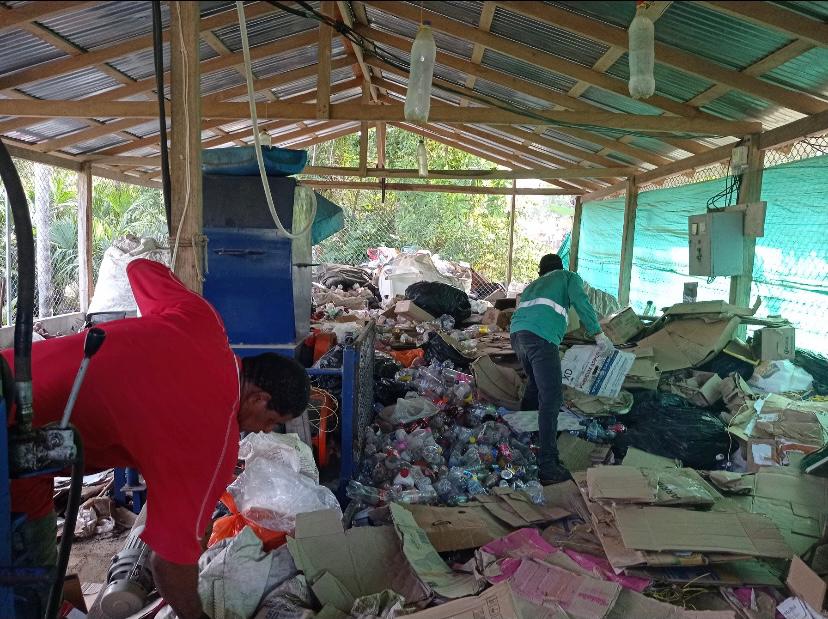
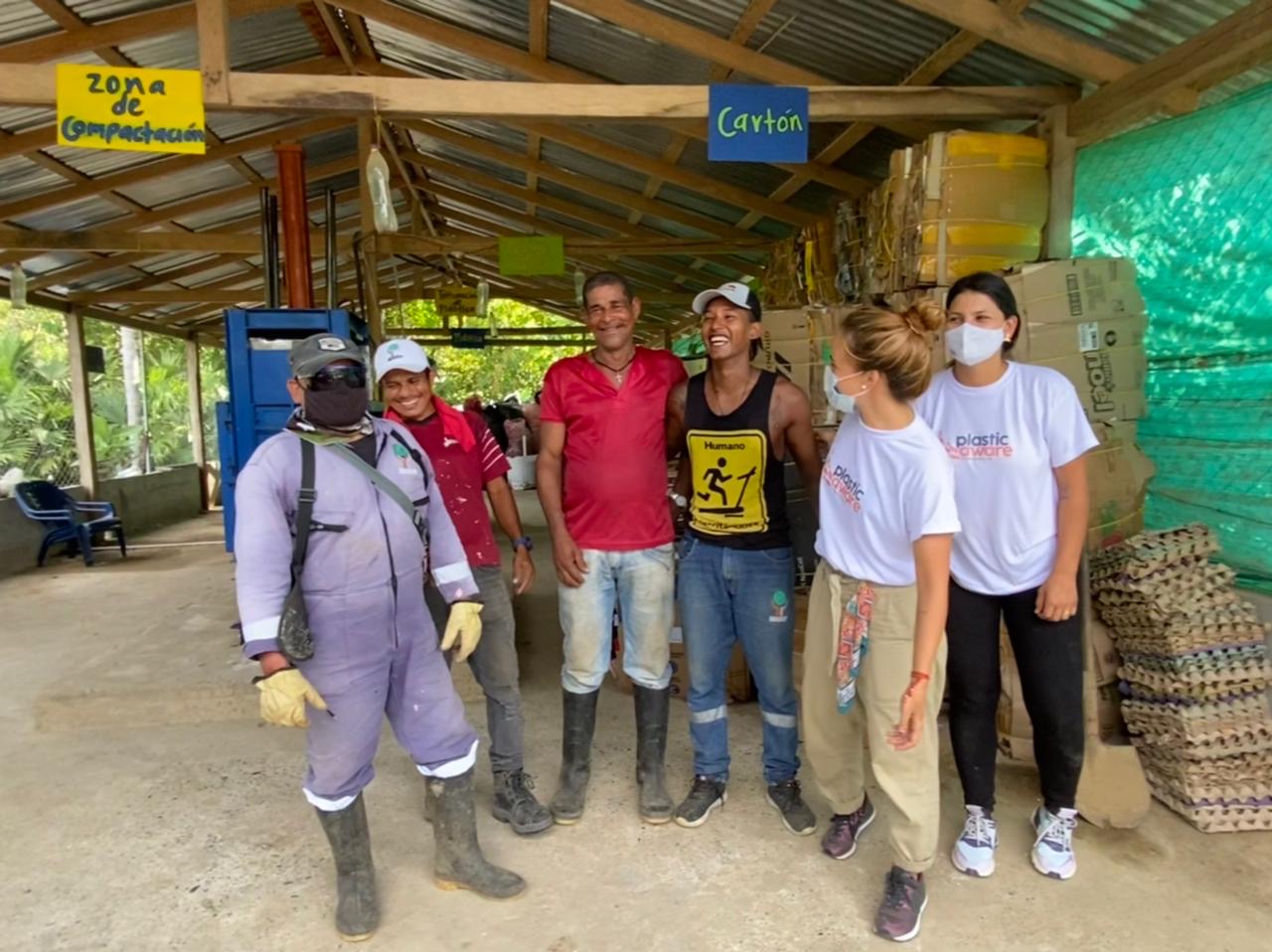
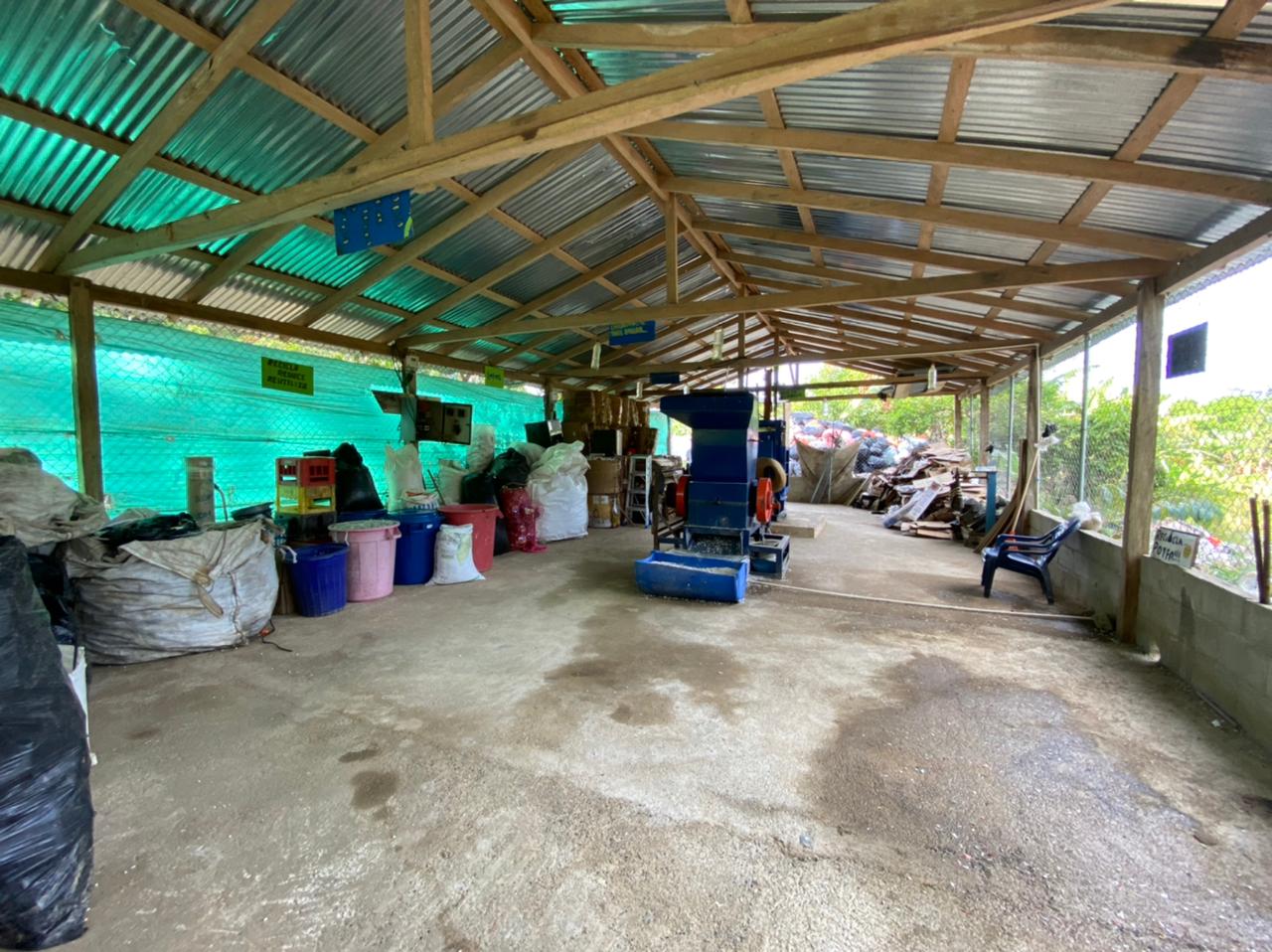
In other news, we also continued our efforts at the local recycling station. During last month’s assessment, we came to the conclusion that the system needed to be more user-friendly for it to work. This month we put that idea into practice: we helped clean the space, put order into the system, and coordinate the drop off of recyclable materials. The fact that the amount of waste collected has increased since our presence in Capurgana has made us tremendously happy and is a clear sign that our investments are bearing fruit. This intense reorganization process and close collaboration with the head of the recycling company has also revealed where the true weaknesses lie and what the best areas for improvements are. So we promptly decided to adjust our initial plans: instead of providing the company with an extrusion machine, we equipped them with better work utensils for more efficiency and less injuries.
Simultaneously, Ana, Plasticaware’s environmental engineer, acted as a consultant for the recycling company by optimizing the garbage collection routes and creating documents on how to better deal with the garbage problem, especially, the open garbage dump.
Lastly, we also started working closely with the foundation “Ecopazifico”. This great foundation came to Capurgana to install four recycling containers. The foundation is very well known in Colombia and their help was a great addition to our work. We learned a lot from their experience and also profited from their network. The plastic heroes were super committed and motivated to take on extra work. They helped during an Ecopazifico beach-clean-up, where they were collecting Mapare to design an “art wall” out of plastic, and defined critical areas in Capurgana and challenged themselves to clear the space within 3 days. They did an incredible job proving that we have already left a mark.
That’s all for now. Talk soon 🙂

3. Blog: What Ever is the Problem with Plastic?
Let’s be clear since its mass introduction, less than a century ago, plastic has significantly improved all areas of our lives (Choi, 2020). Not only has it been proven to be extremely beneficial in the medical field or automotive industry but it has also made our lives safer, our food last longer, and our drinking water cleaner. In fact, it has proven itself to be so valuable that global mass-production of virgin plastic to date (2017) is estimated at 8,300 million metric tons (Mt) (AAAS, 2017). To put that into context: If we were to continue at this rate, we could double-bag the Earth with two single-use plastic bags by 2050 (Choi, 2020). According to Geyer, Jambeck and Lavender who published their findings in an AAAS article in 2017: “as of 2015, approximately 6300 Mt of plastic waste has been generated, around 9% of which has been recycled, 12% was incinerated, and 79% was accumulated in landfills or the natural environment”. And there is your problem right there! The sheer amount of plastic produced for single-use each year combined with the product’s inability to biodegrade ultimately ensures that it will live on in its original form (almost) forever. And to make matters worse, over time, as it is weakened by sunlight, it will slowly break down into millimeters or micrometers and becomes what we call microplastics impacting all sources of life.
So, what can be done? The topic is complex and goes well beyond the scope of this blog post. However, one thing becomes abundantly clear just by looking at the numbers presented above. We as individuals, households, communities, cities, and nations need to REDUCE the amount of plastic created, REUSE what has been made to expand its lifetime, and once it is no longer usable we must RECYCLE adequate so it can be repurposed.
The internet provides an abundance of literature and general information on how to tackle plastic pollution ranging from scientific papers, to newspaper articles, to TED talks, documentaries, and, yes, the topic even found its way into John Oliver’s British comic review show “Last Week Tonight” in March 2021. With the amount of information flowing around, we’ve asked ourselves, what our contribution can be in this context. Instead of creating one article after another that summarized primary sources and repurposes other people’s findings, we’ve decided to elevate those important voices through our blog making them available to you – our readership. In the hopes of sparking interest and encouraging a conversation, we would like to use our blog every once in a while to share recommendations ranging from heavy reading to light-hearted videos on the topic. And we will start with sources mentioned in this introduction article.
If you like to have a laugh while being educated, head on over to John Oliver’s Youtube channel. Alternatively, Laura Parker’s seven minute read provides a short yet comprehensive top-level introduction to the topic. If you’re interested in the business side of things and want to read more about the trillion-dollar opportunities that lie in waste reduction, this Harvard Business Review might just be for you. And lastly, for all you number crunchers out there Geyer, Jambeck and Lavender provide an interesting perspective on production, use, and fate of all plastics ever made.
Blog written by Janine
2. Blog: What we’ve achieved so far – March 2021 News
March 2021 has been a busy month for us at Plasticaware. As such, we would like to share some of the key milestones, successes, but also drawbacks we’ve experienced over the past few weeks in Capurganá.
What started as a three-women project is now slowly but surely turning into a cross-country movement where many different stakeholders from Colombia and Switzerland have joined forces to create change. Of the many volunteers supporting us, the plastic heroes are perhaps one of the most important ones as they bridge the gap between our organization and the local communities advocating for a lasting behavioral change in their immediate surroundings. It, therefore, comes as no surprise that our first weeks in Capurganá focused heavily on recruiting local plastic heroes. Heroes come in many forms. In our case, we found them at the local high school in the form of 26 11th-graders (approx. 16 years old).
During an intense one-week training course, we taught the students about our mission, the effects plastic has on the environment, and how to recycle correctly. The focus was set on plastic pollution and promoting the idea of “plastic as a resource” rather than “plastic as waste”. At the end of week one, the students took a test and received a plastic hero certificate. We were particularly struck by the passion, enthusiasm, and commitment the plastic heroes demonstrated to support the fight against plastic pollution.
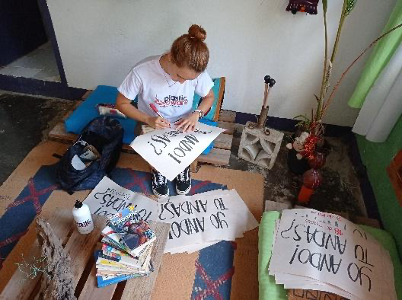
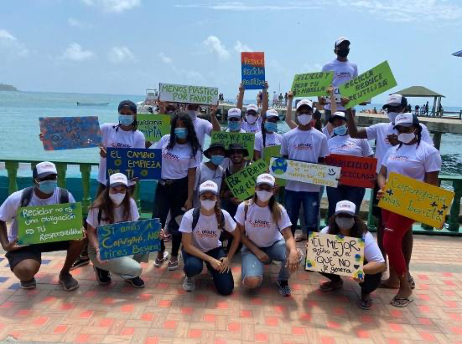
Week two focused on getting the word out. Together with our newly won plastic heroes, we launched the campaign “Yo ando, tu andas” which loosely translates to “I’m joining and so should you”. The campaign focused on raising interest, curiosity, and awareness as well as starting a dialog with members of the local community. For that, signs and posters were created and distributed all around town. The campaign was rounded off with a small get-together at the end of the week where the project was introduced to a broader audience and the topic of plastic pollution discussed further.
Capurganá experiences a spike in tourism around the Easter holidays each year. It was therefore only natural for us to concentrate our efforts on involving these individuals to achieve our next milestone: beach cleanups. Each morning, we waited for the tourists to arrive by boat. We greeted them with signs and posters making them aware of the diar plastic and waste crisis Capuraganá is facing while simultaneously encouraging them to participate in our afternoon beach cleanups. We experienced a really great turnout, were able to hold many fruitful conversations, exchange ideas, and spark a dialog for change between generations – all while making Capurgangá’s beaches a little cleaner.
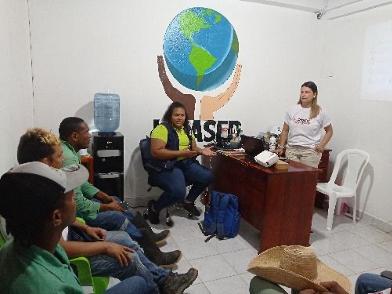
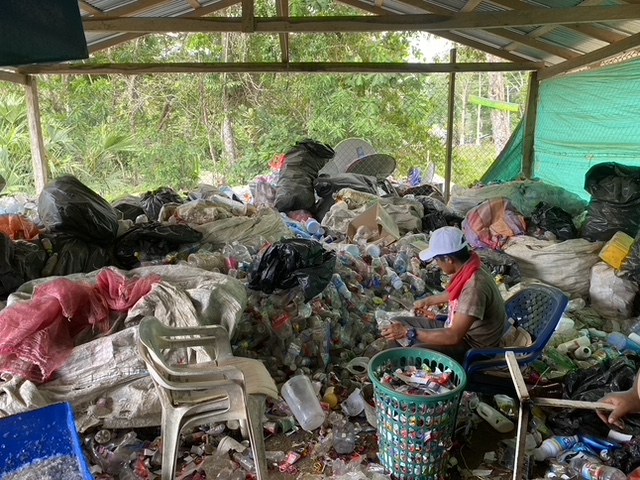
A well-functioning recycling station will have one of the biggest and most sustainable long-term impacts. That is why we are also working closely with the local recycling company Jacasep. The recycling station’s objective is to sort, clean, and pack recyclable waste so that it can be shipped out of Capurganá or upcycled locally. Since its introduction, the company has been overwhelmed with the organization of the different recyclables. As a result, waste has accumulated and has not been processed and recycled properly. To tackle this problem head on, we brought in an environmental engineer to train Jacasep’s workforce and also hired an additional employee for three months to help with the extra workload. In addition, we are collaborating with Jacasep’s president to create a new and more efficient system/work plan to run the recycling facility.
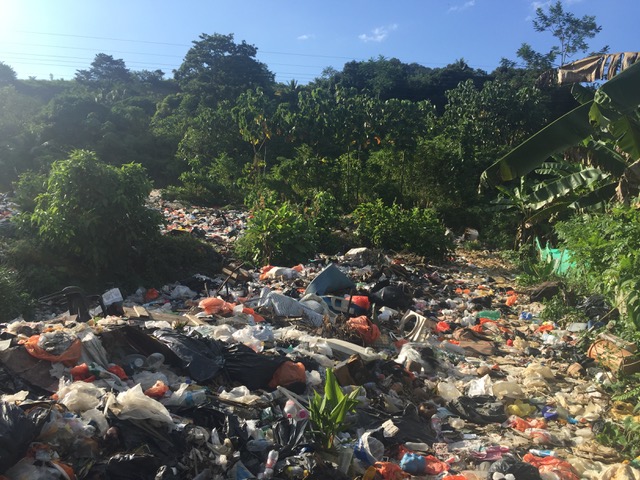
While a lot has been going well, some things have also turned out to be more complicated than expected. One such particular problem comes in the forms of landfills – huge open garbage dumps to which we, as an organization, do not have a solution at hand. Even though we are currently not actively working towards reducing or mitigating the garbage dumps. We are hopeful that our efforts will keep the open garbage dump at bay and will significantly decrease its growth over the coming years.
Our project focuses on “helping people help themselves”. That means, we provide the concepts, ideas, and resources. The success and outcome is then heavily dependent on the individual participants and local community. That is why it is paramount that we are able to convince the entire community to jump on board. We, therefore, spent a lot of time and energy into meeting as many different stakeholders as possible to discuss their role in this matter.
It is difficult to put into words how much joy it brings to work on the grounds every day and witness the direct impact Plasticaware has had in just the past four weeks alone. All of this is of course only possible because of your tremendous help and contribution. We are extremely grateful for the trust all of you have put into us and into our mission. For this, we would like to thank you very much.
Stay tuned for more news and information about our achievements in April. Until then, reduce, reuse, and recycle 😉
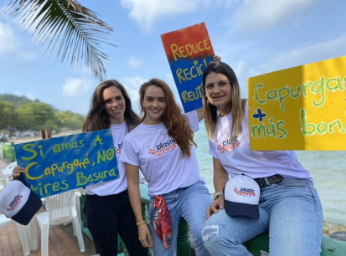
1. Blog: This is us 
For many years the three of us dreamt of leaving a positive mark on this world. A mark that goes beyond our immediate surroundings and actively fights the systemic injustice and imbalance our society is built up on. A system that is tilted in our favor and ensured that, growing up, we did not have to worry about food, safety, shelter, education and, medical assistance. All things, which we have come to understand are pivotal to a person’s or a community’s success.
Inequality and economic injustices are also inherently linked to environmental issues. Angela Francis, Chief Advisor, Economics and Economic Development at WWF and member of UCL’s Green Innovation Policy Commission and IPPR’s Environmental Justice Commission, just recently discussed how delivering a green economy will “…improve our health and our well-being and our quality of life, how it will deliver better jobs, a better economy, more opportunities”. This perfectly describes what we aim to achieve with Plasticaware in Capurgana, Colombia. But let’s start from the beginning:
Having seen the devastating environmental and marine pollution and the stark economic differences between rural and urban areas in Colombia, we decided to focus our efforts on Capurgana – a small community where we can have an immediate and long-term impact both environmentally and economically. Plasticaware’s aim and mission were formed over the course of a couple of months in 2020. We bounced numerous ideas off of each other, challenged the concept countless times, had to rethink the project over and over again, and started anew. We had ups and downs. We had to overcome cultural misunderstandings, language barriers, and, yes, perhaps the most infamous challenge of the “2020 Zoom Era”: we also struggled to hit the unmute button before we started talking during our conference calls 😉 Finally, after months of preparation, Plasticaware was founded in November 2020 with an enormous amount of heart, passion, willpower, determination and of course effort and time.
Over the past year, we’ve experienced tremendous growth not only as an organization but also as individuals and as a group. As a result, our friendship is stronger than ever, and we want to take you along for the ride. This blog will share personal stories, project updates, environmental topics and much more. But first, we want to share our own personal thoughts and motives on why we each decided to be part of this wonderful venture that is Plasticaware.
Let’s start with Céline whose eagerness and determination were and are paramount to Plasticaware’s success.
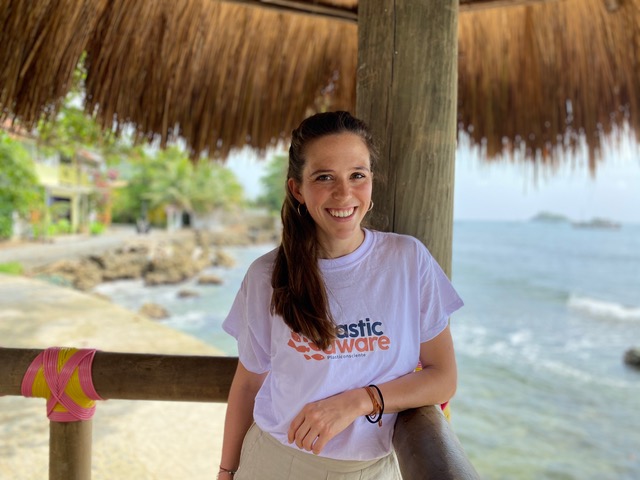
Céline’s Story:
It has always been a dream of mine to start an aid project. Why? Because I want to help people on this earth who do not have the luck to be born into a privileged country or a supportive family. But let’s go back in time: even as a kid I was enormously interested in travelling the world, I wanted to see different people, cultures and ways of living. I always appreciated the fact that I had the opportunity to do so.
With this open mind of mine and a little critical thinking it was clear that I wanted to use my privileges for the better. At the age of 17, I organized a charity gala as part of my high school thesis which collected CHF 7,000 to support an organization in Kisumu Africa that built a Kindergarten for the local community. Seeing the happy faces of the kids and parents when they heard the news was a rewarding and enriching experience that I have never felt before. I knew then that I wanted to do something similar again. It was also during this time that I became close friend with Sharon. And as one says, the best friendships are formed in youth.
Due to my many part time jobs, I was able to travel to many different parts of the world. Travelling has opened my mind and has given me a new perspective on live. I have seen poverty, pollution, violence, hunger and injustice. Three years ago, I went to Colombia for a semester abroad and that is where I met Natalia.
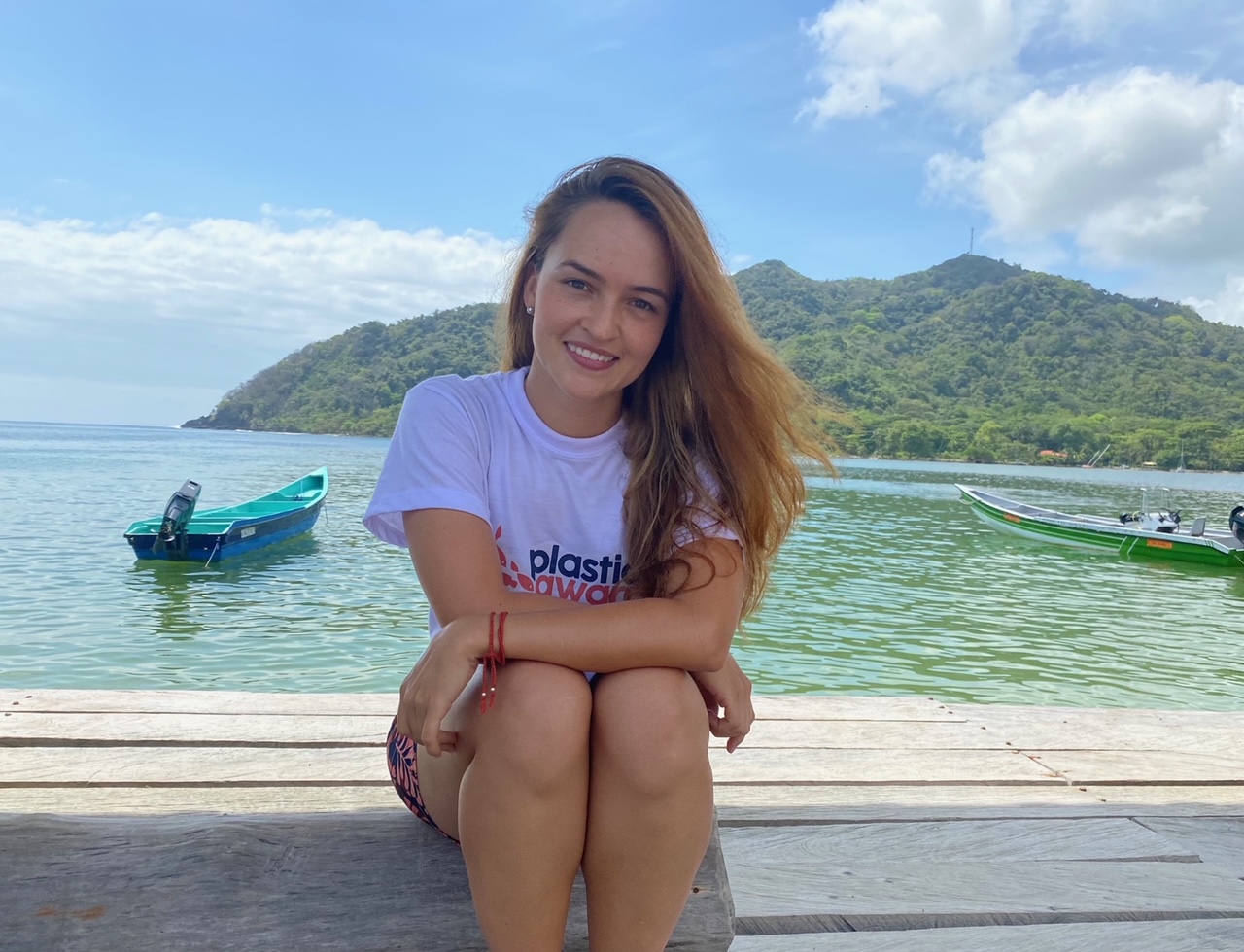
Natys Story:
I grew up sheltered and protected in Medellin, Colombia. During my studies and throughout my first jobs I’ve developed an interest in women’s rights issues, women’s needs and poverty in Colombia. A couple of years ago I met a swiss student in one of my master classes. From the beginning I was amazed by her enthusiasm and strength to be completely alone in a new country without much knowledge of the language, the people or the cultural background. In the beginning communication was difficult since I was unable to speak English nor was she able to speak Spanish. Regardless, we were drawn to each other and got along without speaking. We found commonalities in our shared understanding of the world and later on discussing the inequality between the rich and the poor. Infected by Céline’s drive I decided to travel through Europe in 2018. Since then, I am even more aware of the world’s injustice and how fortunate I am to be born in a stable city. Spending a few days in Zurich I also met up with Sharon with whom I bonded right from the start despite the language barrier.
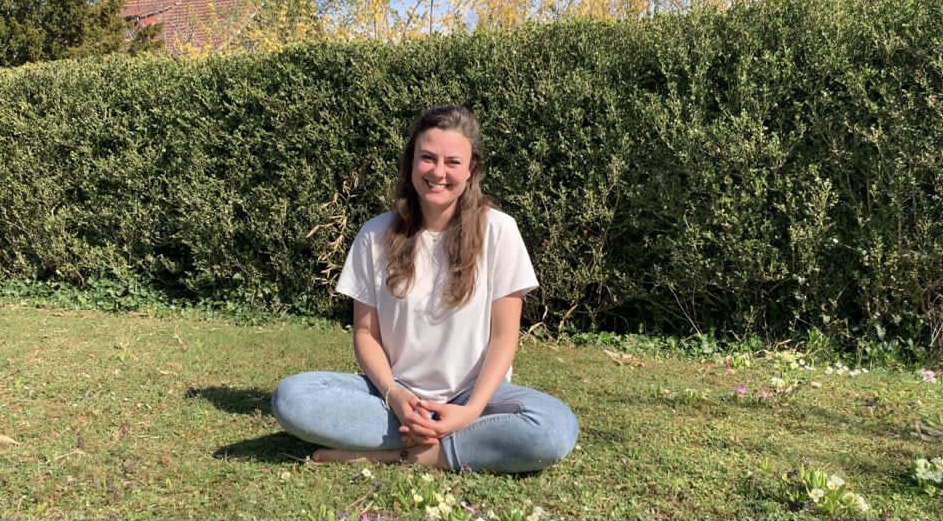
Sharon’s Story:
During my studies in psychology, I learned quickly that you can have a disadvantage in life based on the social and economic hand you were dealt with at birth. Factors such as socioeconomic status, possibility of education, or health have a direct impact on our growth and development. From an early age I started working and volunteering in areas that support children’s and juveniles’ growth process. I worked with kids in theater, arts, as well as education. But I was always striving to do more and have an impact beyond the Swiss borders. Seeing how Céline collected money for a good cause opened my eyes and gave me the motivation to do something alike. Since then, our friendship has grown further and further. We’ve not only become the best of friends but also travel buddies. During our trips we have always looked for something meaningful to do that represents our shared values.